
Elsner: Purpose-Built Precision Since 1934 | Hanover, PA
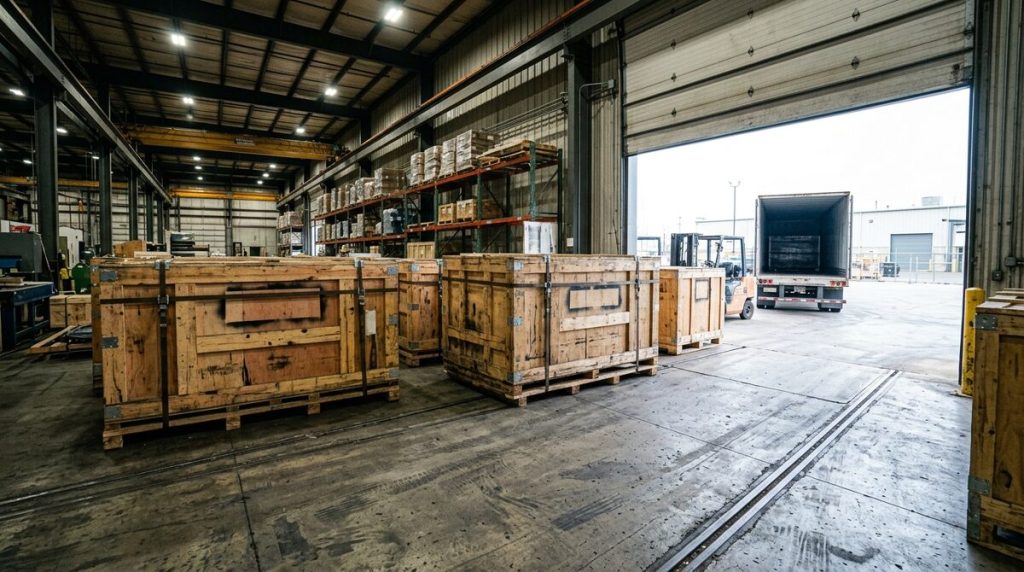
American converters spent the first half of 2026 recalculating capital budgets they thought were settled. Two presidential proclamations rebuilt the Section 232 tariff structure around steel, aluminum and copper this spring, and steel-intensive production equipment sits squarely inside it. For anyone running rewinders, slitters, laminators, folders, core cutters or perforators, the arithmetic of buying new has changed — and the version of that arithmetic in effect today has an expiration date attached to it.
Proclamation 11021, signed April 2, 2026, restructured the regime in three tiers. Articles made of aluminum, steel or copper carry a 50 percent ad valorem duty. Derivative products that tend to be predominantly composed of those metals carry 25 percent. A narrower subset — defined in the proclamation as fixed industrial machinery and power equipment — carries a temporarily reduced 15 percent. Converting lines are steel-intensive by design. Where a given machine lands in that hierarchy is a question of Harmonized Tariff Schedule classification rather than marketing category, and it now moves landed cost more than the quoted machine price does.
On June 1, the administration issued Proclamation 11032, further adjusting the tariff regimes for aluminum, steel and copper. Effective June 8, it built a tiered schedule for mobile industrial equipment and machinery: a 25 percent baseline; a calibrated 15 percent effective rate for goods from Argentina, Ecuador, El Salvador, Guatemala, Japan, Korea, Liechtenstein, Switzerland, Taiwan, the United Kingdom and EU member nations; a 10 percent rate for derivative articles whose steel content was melted and poured in the United States; and, for USMCA-qualifying goods from Canada and Mexico, duty applied only to non-U.S. content subject to a 15 percent floor. Where multiple rates could apply, the proclamation specifies that the lowest governs.
Three details matter more than any single rate. The reduced rates are explicitly temporary — they run through December 31, 2027, and the earlier structure resumes January 1, 2028. The threshold for qualifying as made “entirely” from American metal dropped from 95 percent of weight to 85 percent, a change that applies across both proclamations and converts domestic content from a talking point into a pricing lever. And two product categories that had previously fallen outside coverage, aluminum lithographic plates and steel racks, were pulled in — a reminder that scope is being actively expanded, not simply re-rated.
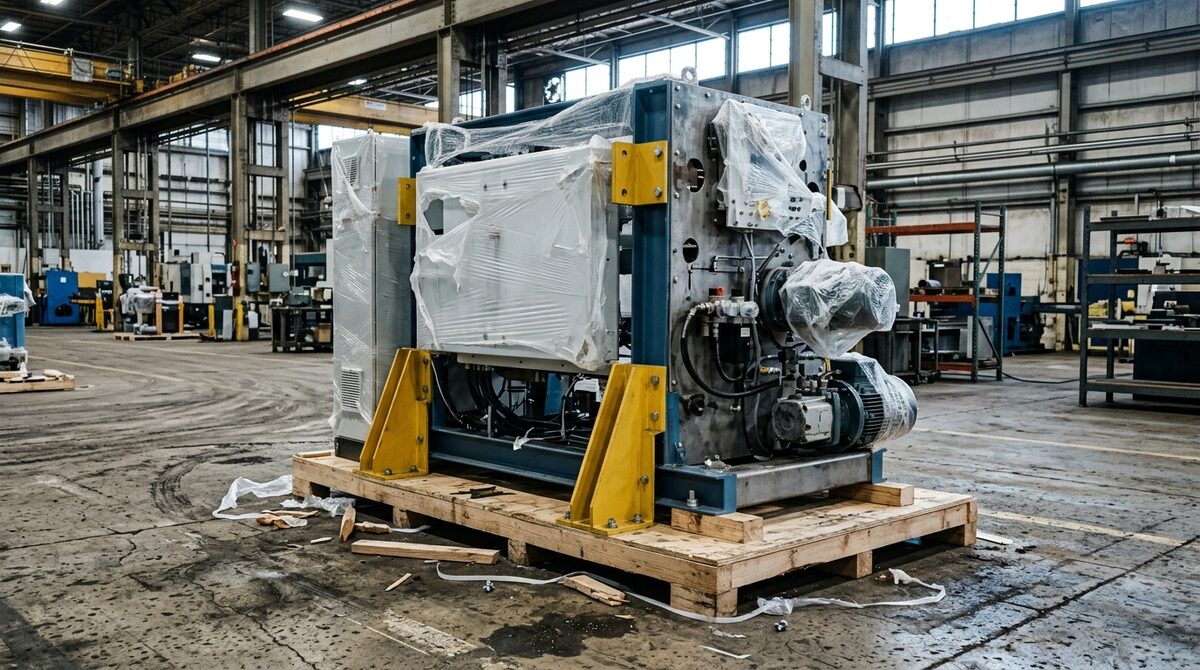
For a converting plant, the practical consequence is that duty exposure is now a line item to be engineered rather than a surcharge to be absorbed. Classification determines the tier. Country of origin determines whether the calibrated rate applies. Metal provenance determines whether the 10 percent pathway is available at all, and proving it requires mill documentation most equipment buyers have never had occasion to request. Entry timing determines which structure applies in the first place. None of those are procurement afterthoughts anymore, and none of them are questions a machine builder’s quote sheet answers on its own.
Two constraints shape what converters do next. One is demand. The other is staffing: the technicians who know these machines are leaving faster than plants can replace them, a squeeze detailed in why the converting maintenance workforce gap is now a production risk. A new line that nobody on shift can troubleshoot solves considerably less than the capital request implies.
Capacity utilization tells the demand half of the story. According to the Federal Reserve’s monthly statistical release, manufacturing capacity utilization stood at 75.7 percent in June 2026, roughly 2.5 percentage points below its 1972–2025 average, with total industrial production about 1.1 percent above its year-earlier level. Plants that are not running flat out rarely build a case for greenfield capital equipment. What they do build a case for is uptime, throughput and yield on the machines they already own.
That is where the retrofit math has quietly improved. A control system replacement, a drive conversion, a rebuilt unwind stand, an upgraded tension loop or a guarding package is not an imported capital good. It is engineering, labor and domestically fabricated parts — categories carrying no Section 232 exposure whatsoever. The comparison is not merely cheaper; it is structurally different. A rebuild schedules into existing shutdown windows instead of requiring a multi-quarter installation. It preserves the operator familiarity that took years to build. And it avoids the requalification work that follows a new platform in regulated end markets such as medical nonwovens, bandage and filtration converting, where a validated process is an asset in its own right.
The same logic applies to compliance-driven upgrades. Older converting lines carry the exposure that keeps lockout/tagout and machine guarding on OSHA’s most-cited list, and a guarding and controls package is far easier to justify than a new machine carrying a duty on top of a long lead time. On a legacy line, safety work and modernization work usually turn out to be the same project.
What all of this argues for in the second half of 2026 is a short, unglamorous exercise. Inventory the converting assets that are genuinely at end of life against those that are simply behind on controls — the two get conflated constantly, and the second category is much larger than most plants assume. Price both paths honestly, with duty included in the import quote rather than discovered at entry. If importing, lock classification and entry timing now, and ask suppliers directly about U.S. melt-and-pour content, because the 85 percent threshold is reachable in a way that 95 percent generally was not. If rebuilding, sequence the work against planned downtime rather than waiting for a failure to sequence it for you.
The window is narrow and dated. Equipment specified now but entered for consumption in 2028 pays the reverted rate, not the transitional one. Converters that intend to import should treat the remainder of 2026 and all of 2027 as the decision period. Those that do not should be pricing what a rebuild actually delivers against what a new line costs after duty — and for a lot of proven platforms, the honest answer is that the machine already on the floor wins.
Elsner Engineering: Converting Equipment Support Since 1934
Elsner has built, supported and modernized converting machinery from Hanover, Pennsylvania for more than nine decades, serving paper tube, nonwoven, bandage and filtration manufacturers in more than 40 countries. ISO 9001:2015 certified.
Our Services Include:
- Commercial Series Machinery Support — Spare parts, field service and rebuild programs for rewinders, slitters, laminators, folders, core cutters and perforators
- Machine Retrofit and Control System Modernization — PLC, HMI and drive upgrades that extend the service life of proven equipment
Evaluating rebuild versus replace? Contact Elsner for an equipment assessment and a cost comparison before your next capital cycle.
Works Cited
- “Further Adjusting the Tariff Regimes for Imports of Aluminum, Steel, and Copper Into the United States.” Proclamation 11032 of 1 June 2026. Federal Register, vol. 91, no. 107, 4 June 2026, pp. 34085–34141, www.federalregister.gov/documents/2026/06/04/2026-11314/further-adjusting-the-tariff-regimes-for-imports-of-aluminum-steel-and-copper-into-the-united-states. Accessed 23 July 2026.
- “Industrial Production and Capacity Utilization — G.17.” Board of Governors of the Federal Reserve System, www.federalreserve.gov/releases/g17/current/default.htm. Accessed 23 July 2026.