

The Skills Gap Crisis: Why Precision Machining Automation Is No Longer Optional
Elsner: Purpose Built Precision Since 1934
American manufacturing faces a workforce crisis that threatens to undermine decades of reshoring progress. The numbers are stark: 12.69 million people worked in U.S. manufacturing as of December 2025, down from the high-12-million range earlier in the year. More troubling, industry analysts project the sector may need 3.8 million new workers by 2033, with nearly half of those positions at risk of going unfilled. As a premier provider of industrial solutions, Elsner Engineering Works Inc is at the forefront of addressing these challenges through advanced technology.
For precision machining automation workforce operations, this workforce challenge creates an existential question. The skills required to operate advanced CNC equipment, interpret complex blueprints, and maintain tight tolerances take years to develop. As experienced machinists retire and fewer young workers enter the trades, manufacturers must decide: compete for an ever-shrinking pool of skilled workers, or invest in custom automation machinery that amplifies the capabilities of their existing workforce.
The challenge intensifies as manufacturing technology advances. Modern five-axis machining centers, electrical discharge machining systems, and precision grinding equipment demand operator expertise that entry-level workers simply do not possess. The gap between available workforce skills and equipment requirements continues widening, forcing manufacturers to choose between limiting their capabilities or finding alternative approaches to production.
Understanding the Workforce Mathematics
The Deloitte Economics Research Center's analysis of U.S. manufacturing labor paints a sobering picture. Manufacturing employment has declined significantly from its 2000 levels, with the steepest losses in labor-intensive sectors like textiles and apparel. However, even high-value, technology-intensive sectors have seen employment decline despite strong output growth—evidence that automation and productivity gains have reduced labor requirements across the industry.
This productivity-employment paradox creates both challenges and opportunities. Labor productivity in U.S. manufacturing has risen by 42.2 percent since 2000, with automation and advanced manufacturing technologies driving much of this improvement. The result: manufacturers can produce more output with fewer workers, but those workers require increasingly sophisticated skills that are difficult to develop and retain.
The wage dynamics tell part of the story. Production and nonsupervisory manufacturing workers earned $29.51 per hour as of late 2025, while average hourly earnings across all manufacturing employees reached $36.07. Total employer compensation—including benefits—averaged $46.30 per hour. These wages reflect the value of manufacturing skills but also highlight the cost pressure driving precision machining automation workforce investment.
Approximately 409,000 manufacturing positions remained unfilled as of August 2025, representing immediate production capacity that companies cannot access due to workforce constraints. This gap translates directly to lost revenue, delayed orders, and declined business opportunities. For manufacturers competing in time-sensitive markets, workforce limitations can mean the difference between winning and losing critical contracts.
The Precision Machining Skills Challenge
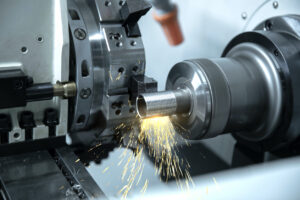
Precision machining faces unique workforce pressures compared to general manufacturing. Operating multi-axis CNC equipment requires an understanding of G-code programming, tool selection, material properties, and quality inspection techniques. Maintaining tight tolerances—often measured in thousandths of an inch—demands experience that cannot be taught quickly.
The NIST Manufacturing Extension Partnership has identified workforce development as one of the top challenges facing small and medium-sized manufacturers. According to NIST's advanced manufacturing technology guidance, manufacturers should consider training programs covering AI, machine learning, and robotics to ensure employees are ready for the future of manufacturing. Yet training alone cannot solve the fundamental supply-demand imbalance for skilled machinists.
This is where precision machining automation workforce solutions enter the equation. Modern CNC equipment with advanced automation features can perform many tasks that previously required highly skilled operators. Automated tool changers, in-process measurement, and adaptive machining systems reduce dependence on operator expertise while maintaining quality standards. Many facilities are integrating commercial series machinery to ensure consistency when human oversight is limited.
The complexity of modern precision work compounds the skills challenge. Aerospace components, medical devices, and automotive parts require documentation, traceability, and quality verification that add administrative burden to technical requirements. Automation systems that integrate quality management with production execution reduce the total skill set required for compliant manufacturing.
Automation as Workforce Amplifier
The most successful manufacturers view automation not as workforce replacement but as workforce amplification. This distinction matters for both practical and strategic reasons. Practically, even highly automated operations require skilled workers for setup, programming, maintenance, and quality oversight. Strategically, companies that position automation as supporting their workers rather than replacing them experience better retention and easier recruiting.
For manufacturers navigating broader industry transformation, understanding how automation investments fit within larger strategic shifts provides essential context. Reviewing Custom Automation Solutions: The Engine Behind U.S. Manufacturing's Reshoring Revolution connects precision machining automation workforce needs to the broader reshoring movement, reshaping American manufacturing.
The automation-as-amplifier approach requires careful attention to system design. Equipment that demands specialized technicians may solve one workforce problem while creating another. The most effective automation solutions integrate seamlessly with existing operations, can be maintained with skills available locally, and provide clear productivity improvements that justify investment.
Consider the difference between a highly specialized automated machining cell requiring proprietary training and support, versus custom-designed automation that builds on standard CNC platforms with locally serviceable components. Both may deliver similar production capabilities, but their workforce implications differ dramatically.
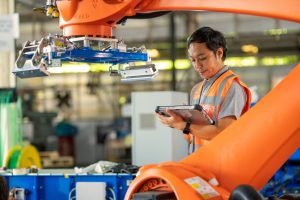
Lights-out manufacturing represents the ultimate expression of automation as a workforce amplifier. Facilities capable of running unattended during nights and weekends effectively multiply production capacity without proportional workforce expansion. A single shift of skilled workers can support three shifts of production, dramatically improving asset utilization and cost competitiveness.
Building Workforce-Compatible Automation
Designing automation that works with the available workforce requires understanding both current capabilities and realistic development trajectories. Several principles guide effective workforce-compatible automation:
Standardization where possible, customization where necessary. Standard equipment platforms benefit from broader training resources, more available technicians, and better parts availability. Custom elements should address specific production requirements rather than adding unnecessary complexity.
Intuitive interfaces reduce training requirements. Systems designed with clear feedback, straightforward controls, and effective error recovery allow workers to develop competence more quickly and operate confidently across a wider range of applications.
Built-in diagnostics support local maintenance. Equipment that clearly communicates its status and provides guidance for common issues enables in-house maintenance teams to keep systems running without waiting for specialist support.
Documentation and training integration. Effective automation includes comprehensive documentation, training materials, and ongoing support resources that build workforce capability alongside production capacity. This is a core focus at the Elsner Tech Center, where we bridge the gap between machine and operator.
Remote monitoring and support capabilities extend the reach of available expertise. When issues arise that exceed local capabilities, remote diagnostic access allows specialists to troubleshoot problems without travel delays. This approach makes advanced automation viable even in locations with limited local technical support.
Regional Considerations for Workforce and Automation
Workforce availability varies significantly by region, influencing automation strategy differently across manufacturing locations. Areas with strong technical education programs and established manufacturing traditions may have better access to skilled workers, reducing pressure for extensive automation. Regions experiencing acute labor shortages may require more comprehensive automation solutions to achieve viable operations.
For manufacturers evaluating location and supply chain decisions, understanding how regional capabilities align with workforce and automation requirements informs strategic planning. Examining Building Resilient Supply Chains: The Critical Role of Domestic Machining and Custom Automation explores how regional manufacturing ecosystems support operational resilience. Contract manufacturing can often serve as a bridge while regional workforces catch up to technology.
Pennsylvania's manufacturing corridor benefits from proximity to technical schools, community colleges, and universities with manufacturing-focused programs. However, even this relatively strong workforce infrastructure cannot fully meet demand from growing manufacturing operations. The gap between workforce supply and employer needs continues to drive precision machining automation workforce investment across the region.
The retirement wave affecting manufacturing creates particular urgency for automation investment. Experienced machinists retiring over the next decade take irreplaceable knowledge with them unless manufacturers capture that expertise in automated systems and documented procedures. Companies that delay automation investment risk losing institutional knowledge that cannot be reconstructed.
The Path Forward for Precision Manufacturers
The workforce crisis facing precision machining is not a temporary condition but a structural reality requiring a strategic response. Manufacturers who treat automation as an optional enhancement rather than an operational necessity risk falling behind competitors who embrace technological solutions to workforce constraints.
Successful navigation of this transition requires an honest assessment of current workforce capabilities and realistic projections of future availability. It demands automation investment that amplifies existing workers rather than creating new skill requirements that cannot be met. And it requires partnerships with automation providers who understand both the technical and human dimensions of manufacturing transformation.
Elsner: Your Partner in Manufacturing Excellence
At Elsner, we deliver manufacturing excellence through turnkey custom automation solutions and precision engineering. For nearly a century, we've helped businesses transform manual processes into efficient, automated production lines.
Our Services Include:
- Full-Service Machine Shop - Complete CNC machining, fabrication, and precision manufacturing from single prototypes to high-volume production
- Advanced Machining Capabilities - 5-axis CNC centers, EDM, grinding systems with tolerances to ±0.0005"
Ready to Transform Your Operations? Contact us to discuss how our purpose-built precision can address your precision machining automation workforce and production challenges.
Works Cited
"A Shrinking Workforce May Thwart US Manufacturing Ambitions." Deloitte Insights, Deloitte Global Economics Research Center, 22 Dec. 2025, www.deloitte.com/us/en/insights/topics/economy/spotlight/us-manufacturing-labor-impact.html. Accessed 1 Feb. 2026.
"Advanced Manufacturing Technology and Industry 4.0 Services." NIST Manufacturing Extension Partnership, National Institute of Standards and Technology, www.nist.gov/mep/advanced-manufacturing-technology-and-industry-40-services. Accessed 1 Feb. 2026.
Related Articles
- Custom Automation Solutions: The Engine Behind U.S. Manufacturing's Reshoring Revolution
- Building Resilient Supply Chains: The Critical Role of Domestic Machining and Custom Automation