

Building Resilient Supply Chains: The Critical Role of Domestic Machining and Custom Automation
Elsner: Purpose Built Precision Since 1934
The supply chain disruptions that began in 2020 exposed vulnerabilities that manufacturers had largely ignored for decades. Just-in-time inventory systems optimized for cost efficiency proved catastrophically fragile when global logistics networks seized up. Now, five years later, the lessons have reshaped how manufacturers think about sourcing, production location, and supply chain architecture. Elsner Engineering Works provides the stability needed to navigate these shifts.
Domestic machining supply chain resilience and custom-automation-machinery have emerged as critical elements in building more resilient manufacturing networks. The shift isn't simply about moving production closer to home—it's about creating supply chain structures that can absorb disruption without catastrophic failure. For manufacturers who learned painful lessons from recent years, investing in domestic capabilities has become a strategic imperative rather than an optional consideration. Building a localized machining strategy is now a prerequisite for long-term operational security.
The consequences of supply chain fragility extend beyond individual companies to entire industries and national economic security. When critical components become unavailable, production lines go idle, customers receive delayed orders, and market share shifts to competitors with more robust supply networks. The manufacturers who emerge strongest from disruption are those who invested in resilience before crises struck.
The True Cost of Supply Chain Fragility
Federal Reserve Bank of Cleveland research on manufacturing workforce dynamics highlights a crucial point: manufacturing's share of the U.S. economy has declined over decades, from 15.1 percent in 2000 to 9.4 percent by mid-2025. This structural shift left American manufacturers heavily dependent on overseas suppliers for components, materials, and finished goods that were once produced domestically.
The consequences of this dependence became painfully clear during recent disruptions. Extended lead times stretched from weeks to months. Critical components became unavailable at any price. Production lines went idle while waiting for parts stuck in container ships or overseas factories. The financial cost ran into billions of dollars across American manufacturing, with some companies losing market position that they may never recover. Many OEMs are now pivoting toward contract manufacturing to mitigate these external risks.
Beyond direct financial losses, supply chain disruptions exposed strategic vulnerabilities. Manufacturers discovered that critical capabilities had migrated overseas without clear documentation. Rebuilding domestic supply for certain components required years of development, even when cost was no object. The fragility of seemingly robust supply chains became impossible to ignore.
The hidden costs of overseas sourcing extend beyond the obvious risks of disruption. Quality problems prove more difficult to resolve across oceans and time zones. Engineering changes face communication barriers and extended implementation timelines. Intellectual property risks increase when production occurs in jurisdictions with weak enforcement. These factors rarely appear in traditional cost comparisons but significantly impact total cost of ownership.
Rethinking Supply Chain Architecture
The traditional approach to supply chain optimization prioritized unit cost above all other considerations. Sourcing decisions were made component by component, selecting the lowest-cost supplier regardless of location. This approach achieved impressive cost reductions during stable periods but created hidden risks that materialized during disruption.
Forward-thinking manufacturers now apply more sophisticated frameworks that balance cost with resilience, lead time, and strategic risk. This recalibration doesn't mean abandoning global sourcing—it means understanding which components and capabilities require domestic availability for operational security, and which can safely rely on distant suppliers.
For manufacturers evaluating how automation investments connect to broader supply chain strategy, understanding the relationship between production capability and sourcing flexibility provides an essential perspective. Exploring Custom Automation Solutions: The Engine Behind U.S. Manufacturing's Reshoring Revolution examines how reshoring production changes supply chain dynamics. Advanced custom automation machinery acts as a buffer against international logistical failures.
Domestic machining supply chain resilience capability serves multiple roles in resilient supply chain architecture. Most directly, it provides local production for critical components that cannot tolerate extended lead times or supply uncertainty. More subtly, it creates options—the ability to shift production domestically when overseas supply is disrupted, even if that option isn't exercised during normal operations.
The option value of domestic capability often exceeds its direct production value. Knowing that domestic alternatives exist changes negotiating dynamics with overseas suppliers, provides insurance against unpredictable disruptions, and enables faster response when market conditions shift. These strategic benefits justify domestic investment even when pure cost comparison favors overseas sourcing.
The Value of Proximity in Manufacturing Networks
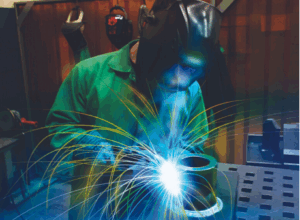
Geographic proximity between manufacturers and their suppliers delivers advantages that cost models often undervalue. Proximity enables closer collaboration during product development, faster iteration on design changes, and more effective quality problem resolution. These benefits compound over time as relationships deepen and communication patterns mature.
The NIST Manufacturing Extension Partnership has documented how regional manufacturing ecosystems create competitive advantages through shared workforce development, technical resources, and supplier networks. These tend to be high-value, technology-intensive operations where proximity to customers and collaboration with supply chain partners create competitive advantages that distant low-cost suppliers cannot match. Proximity is a key driver for industries served by high-precision regional shops.
For precision machining specifically, proximity matters because many precision components require ongoing adjustment and optimization as applications evolve. The ability to walk a problem part across town to your machining supplier, discuss options face-to-face, and receive corrected parts within days rather than weeks creates a real competitive advantage for the manufacturer and their end customers.
Communication efficiency improves dramatically with geographic and cultural proximity. Technical discussions happen in real time rather than across time zones. Nuances translate accurately without language barriers. Site visits for quality audits or process development occur without international travel logistics. These efficiency gains accumulate across hundreds of interactions over the life of supplier relationships.
Building Domestic Capabilities That Scale
Manufacturers seeking to build domestic machining capabilities face a fundamental challenge: establishing the skills, equipment, and systems required for precision manufacturing takes years, not months. This development timeline conflicts with the immediate supply chain needs that often motivate domestic sourcing initiatives.
For companies navigating workforce and capability development challenges, understanding how automation can accelerate the path to domestic production provides valuable strategic insight. Reviewing The Skills Gap Crisis: Why Precision Machining Automation Is No Longer Optional explores how automation addresses workforce constraints that often limit domestic manufacturing expansion. Strategic retrofit programs can also extend the life and capability of existing domestic machinery.
Several approaches can accelerate domestic capability development. Partnering with established domestic suppliers provides immediate access to capabilities while longer-term internal development proceeds. Investing in automation reduces dependence on scarce skilled workers while building production capacity. Focusing initial domestic development on the most critical and time-sensitive components maximizes resilience impact while managing investment scope.
The most successful domestic manufacturing initiatives share common characteristics: realistic assessment of current capabilities and gaps, clear prioritization of which capabilities matter most for supply chain resilience, and patient investment in developing people and systems alongside equipment. Integrating 3D printing into the workflow allows for rapid domestic prototyping during supply gaps.
Vertical integration strategies are gaining renewed attention as manufacturers seek greater control over critical supply chain elements. Rather than relying entirely on external suppliers, some companies are bringing key machining capabilities in-house or developing captive supplier relationships that provide preferential access during constrained periods.
Regional Manufacturing Ecosystems
Manufacturing capability rarely exists in isolation. Successful manufacturing operations depend on the surrounding ecosystems of suppliers, service providers, technical resources, and workforce pools. These ecosystems take decades to develop and represent substantial competitive advantages for regions that have maintained them.
Pennsylvania's manufacturing heritage creates ecosystem advantages that newer manufacturing regions cannot easily replicate. The concentration of machine shops, automation specialists, material suppliers, and technical services enables manufacturers to access capabilities they could not economically develop internally. Workforce availability—while challenging—benefits from technical training programs and manufacturing career traditions that provide baseline skills, and new regions must develop from scratch. The Elsner Tech Center serves as a hub for this regional manufacturing innovation.
For manufacturers evaluating domestic sourcing options, understanding regional manufacturing ecosystems helps identify suppliers with the infrastructure support required for reliable performance. A machining supplier in a region with deep manufacturing traditions can typically access better tooling support, maintenance services, and technical problem-solving resources than an equivalent operation in a region without this surrounding infrastructure.
The depth of regional ecosystems becomes apparent during equipment failures or urgent capacity needs. Manufacturers in established industrial regions can often source emergency repairs, temporary equipment, or overflow production from nearby providers. Those in regions without this infrastructure face longer delays and higher costs when problems arise.
Making Strategic Investments in Resilience
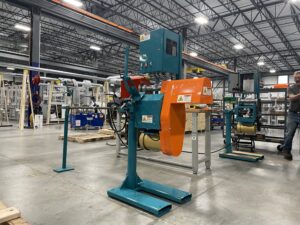
Building supply chain resilience requires investment—in domestic capabilities, supplier relationships, inventory buffers, and operational flexibility. These investments impose costs that purely cost-optimized supply chains avoid. The strategic question for manufacturers: which investments in resilience deliver adequate returns, and which represent excessive insurance against unlikely scenarios?
Effective resilience investment targets specific vulnerabilities rather than pursuing generic redundancy. Manufacturers should identify which supply chain disruptions would cause the most damage, assess the probability and duration of such disruptions, and invest in capabilities that specifically address the highest-priority risks.
Domestic machining supply chain resilience capability addresses several common high-priority vulnerabilities: extended lead times for precision components, quality problems that require close collaboration to resolve, and supply disruption for components where alternative sources are limited. Custom automation addresses vulnerabilities related to workforce availability and production capacity constraints.
The calculus of resilience investment has shifted permanently. Events once dismissed as unlikely—global pandemics, major shipping disruptions, geopolitical trade restrictions—have occurred within five years. Insurance against supply chain disruption now appears more valuable than it did when global trade flowed smoothly and predictably.
Elsner: Your Partner in Manufacturing Excellence
At Elsner, we deliver manufacturing excellence through turnkey custom automation solutions and precision engineering. For nearly a century, we've helped businesses transform manual processes into efficient, automated production lines.
Our Services Include:
- Full-Service Machine Shop - Complete CNC machining, fabrication, welding, and precision manufacturing from single prototypes to billion-unit production runs
- Lights Out Manufacturing - 24/7 automated production capabilities for faster delivery and cost-effective high-volume manufacturing
Ready to Transform Your Operations? Contact us to discuss how our purpose-built precision can strengthen your domestic machining supply chain resilience.
Works Cited
"Where Could Reshoring Manufacturers Find Workers?" Federal Reserve Bank of Cleveland, District Data Brief, 9 Oct. 2025, www.clevelandfed.org/publications/cleveland-fed-district-data-brief/2025/cfddb-20251009-where-could-reshoring-manufacturers-find-workers. Accessed 1 Feb. 2026.
"Manufacturing Workforce Development." NIST Manufacturing Extension Partnership, National Institute of Standards and Technology, www.nist.gov/mep/manufacturing-workforce-development. Accessed 1 Feb. 2026.
Related Articles