
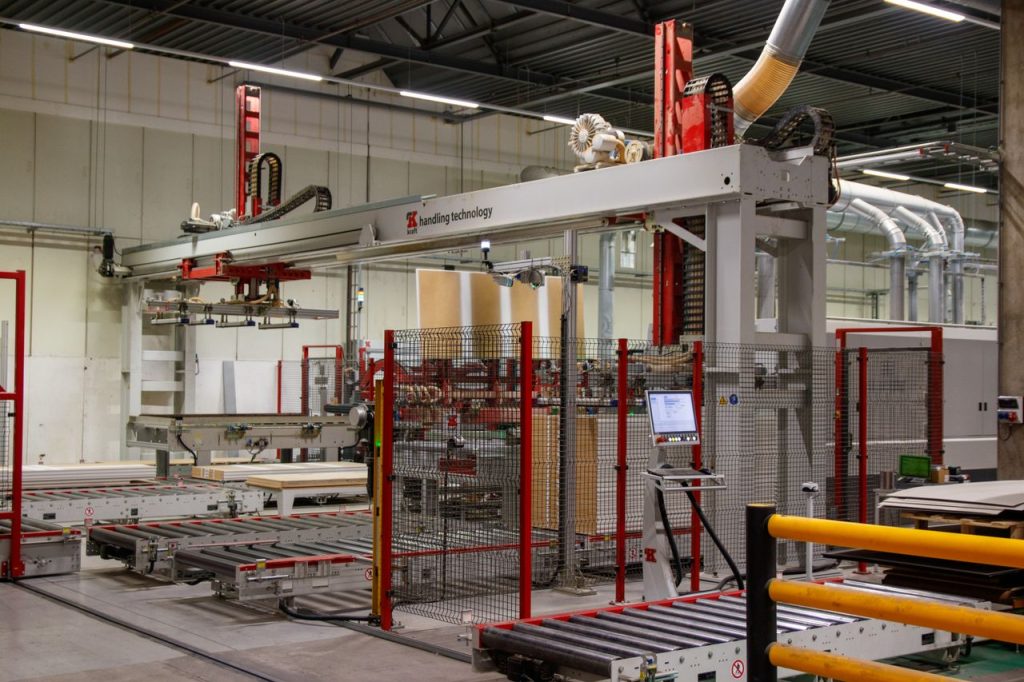
Why Off-the-Shelf Automation Is Failing U.S. Manufacturers in 2026
Elsner Engineering: Quality Custom Automation Since 1934
Something has shifted on the American factory floor. After years of selling automation as a plug-and-play commodity, equipment vendors are running into a wall: the manufacturers actually placing the orders increasingly want machinery built for their exact process — not a generic cell forced into a non-standard application. The numbers behind this shift are not subtle, and they explain why custom automation machinery is the fastest-growing corner of an already growing industrial market.
According to the Association for Advancing Automation, North American companies ordered 36,766 robots worth roughly $2.25 billion in 2025, a 6.6 percent increase in units and 10.1 percent rise in revenue over 2024. Non-automotive sectors led the surge, with food and consumer goods orders jumping 105 percent year-over-year in Q3 2025 alone. Yet the same period saw a 25 percent decline in automotive component orders and a 35 percent drop in plastics and rubber, evidence that automation demand is no longer flowing into the standardized, high-volume applications equipment catalogs were designed around. The growth is happening in operations that need purpose-built solutions.
For manufacturers across Pennsylvania and the broader Mid-Atlantic region, this matters more than headlines suggest. Standard equipment was engineered for an earlier era of production: long runs, stable product designs, predictable labor pools. The manufacturing economy of 2026 looks nothing like that. Mix has gone up, run lengths have come down, talent is scarce, and customer specifications change faster than any catalog can keep pace with. The cost of forcing a generic machine to fit a specialized operation — in lost throughput, quality escapes, integration headaches, and abandoned cells — has become impossible to ignore.
The Global Demand Picture Is Real — But Misleading
The case for automation as a category is overwhelming. The International Federation of Robotics reports 542,000 industrial robots were installed worldwide in 2024, more than double the figure from ten years ago. Asia accounted for 74 percent of new deployments compared with just 9 percent in the Americas. The total operational stock of industrial robots now exceeds 4.6 million units globally, a 9 percent jump over the previous year. Those numbers describe an industry transformation that has already happened in much of the world.
But aggregate installation counts hide a critical distinction. The factories driving global numbers — Chinese electronics plants, Korean automotive lines, Japanese precision assembly cells — operate at scales and product stabilities most U.S. manufacturers do not share. American manufacturing is overwhelmingly small and mid-sized, mixed-product, mixed-volume, and built around customer relationships that demand flexibility. The same robot that runs flat-out producing one part across three shifts in Shenzhen often sits idle in a U.S. plant whose product mix changes weekly. Standard cells cannot bridge that gap. Custom-engineered automation can.
Why Custom Beats Off-the-Shelf for U.S. Manufacturing Realities
The economic case for custom automation rests on five operational realities now hitting U.S. manufacturers at the same time. Each one degrades the value of standardized equipment and increases the relative value of purpose-built systems.
First, product mix has fragmented. A facility producing twelve SKUs in 2010 may now produce sixty, with smaller lots and faster changeovers. Standard automation typically optimizes for one product geometry, one cycle pattern, one packaging format. Custom automation builds in flexibility from the start — quick-change tooling, recipe-driven controls, vision systems that adapt to multiple products on the same line.
Second, regulatory and quality requirements have intensified. Medical device, pharmaceutical, food, and aerospace customers demand documented process control, full traceability, and validation that off-the-shelf machines rarely deliver out of the box. Bolting compliance onto a generic cell is more expensive and less reliable than designing it in from the first concept drawing.
Third, the labor math has fundamentally changed. According to the Manufacturing Institute and Deloitte, the U.S. manufacturing skills gap could leave as many as 2.1 million jobs unfilled by 2030, potentially costing the economy up to $1 trillion in that year alone. A more recent industry analysis from the same partnership projects manufacturers may need 3.8 million new employees by 2033, with roughly 1.9 million positions potentially unfilled if the skills gap is not addressed. Manufacturers facing that math cannot afford automation that requires significant operator skill to run and maintain — they need cells engineered around the operators they can actually hire.
Fourth, reshoring has accelerated demand without bringing back the labor or institutional knowledge that supported earlier production. The capacity needs to be rebuilt from scratch, often for products that were never previously made domestically. Custom automation is, by definition, the only path for processes that did not previously exist on U.S. soil at scale.
Fifth, plant footprints and infrastructure rarely match what catalog equipment expects. Real factories have low ceilings, awkward column spacing, mixed legacy systems, and existing material flows that custom automation engineers can design around — and that standardized cells often cannot accommodate without expensive renovations. Manufacturers exploring Reshoring Is Reshaping Mid-Atlantic Manufacturing — Custom Automation Is the Catalyst can see how regional reshoring trends interact with these on-the-ground realities.
The Hidden Cost of Forcing Generic Equipment Into Custom Applications
Research from the Manufacturing Institute repeatedly confirms what plant managers know firsthand: workforce constraints, technology integration, and process specialization are the dominant pressures shaping capital decisions in this decade. Yet many manufacturers still default to off-the-shelf equipment because the upfront price tag looks lower. The hidden costs catch up quickly.
Custom fixturing, vendor field engineering, integration consulting, control system modifications, safety guarding adjustments, and operator workarounds can add substantial cost to the original equipment investment when a standardized cell is forced into a non-standard application. Cycle time penalties compound over the equipment's useful life. Quality escapes from approximated tooling can erase the entire ROI in a single customer recall. The manufacturers who report the best automation outcomes overwhelmingly describe equipment that was designed around their actual process from the start — not retrofitted to it after delivery.
This is precisely the case for custom automation machinery built around your specific process rather than retrofitted catalog equipment. The economics favor custom when product mix is high, regulatory requirements are stringent, plant infrastructure is non-standard, or workforce limitations rule out skill-intensive operation. For most U.S. manufacturers in 2026, at least three of those four conditions apply simultaneously.
What Custom Automation Actually Looks Like in Practice
Custom automation machinery is not a category — it is an engineering discipline. Done well, it integrates mechanical design, controls, robotics, vision, safety, and process knowledge into systems that solve specific production problems. Done poorly, it is just expensive bespoke equipment that costs more than catalog gear and works no better.
The difference shows up in how a project starts. Successful custom automation projects begin with a documented process assessment: cycle times, defect modes, downtime causes, material flow constraints, labor hours per unit, regulatory requirements, and customer specifications. Concept development follows, with multiple potential approaches evaluated before any detailed engineering begins. Detailed design covers mechanical, electrical, control system, safety, and data integration. Fabrication and assembly happen in a controlled facility — not in the customer's plant under production pressure. Testing and validation prove performance against specifications before installation. Commissioning, training, and documentation close the loop.
Manufacturers weighing how custom automation can address specific industry pressures can learn more about How Custom Automation Is Powering the 2026 Packaging Industry Boom, which examines one of the verticals where the shift away from standardized equipment is most visible.
Elsner Engineering: Your Partner in Custom Automation
Elsner Engineering has designed and built custom automation machinery from our 112,000 square foot facility in Hanover, Pennsylvania since 1934. Our team integrates mechanical engineering, controls, robotics, and process expertise to solve manufacturing problems standardized equipment cannot address.
Our Services Include:
- Custom Automation Machinery — Turnkey automated systems engineered around your specific process, from standalone cells to complete production lines
- Contract Engineering — Mechanical, electrical, and controls engineering for manufacturers without internal engineering capacity
Ready to Build Automation That Actually Fits? Contact Elsner Engineering to discuss how custom-built machinery can solve the production challenges your existing equipment cannot.
Works Cited
“World Robotics 2025 Report – Industrial Robots.” International Federation of Robotics, 25 Sept. 2025, ifr.org/ifr-press-releases/news/global-robot-demand-in-factories-doubles-over-10-years. Accessed 25 May 2026.
“2.1 Million Manufacturing Jobs Could Go Unfilled by 2030.” The Manufacturing Institute, themanufacturinginstitute.org/2-1-million-manufacturing-jobs-could-go-unfilled-by-2030-11330/. Accessed 25 May 2026.